從行道樹看都市 - 從城市印象到時間性的空間
作者: 林逸峰/Yifeng Lin
林逸峰/Yifeng Lin
新加坡國立大學景觀系副教授、大學部學程主任,美國註冊景觀建築師,一宇設計負責人
Associate Professor, BLA Programme Director Dept. of Architecture, NUS. RLA (US). Founding Principal, YIYU Design.
摘要
行道樹不僅是生態或降溫等環境指標,更是一種「時間中的設計」。本文以「尺度、樹種、季節性、修剪維護」四個面向,探討行道樹如何在十年至數十年的時間尺度上,形塑城市步行經驗、光影節奏與集體記憶。文章選取巴黎香榭大道、台北敦化南北路、京都白川、上海法租界與哈佛校園等案例,對比自上而下的形式控制、熱帶氣候下的線性森林、文化尺度的細緻讓渡、歷史層疊與制度治理,提出行道樹作為「時間—空間—記憶」的都市策略。最後回看台灣現況,指出設計與治理斷裂、尺度與樹種的誤讀,以及季節性經驗的不足,並主張以長期維護與制度設計支撐的時間性方法,重構未來城市的韌性與識別。
Abstract
Street trees are more than ecological indicators; they constitute a mode of “designing through time.” This article examines four lenses—scale, species, seasonality, and pruning/maintenance—to show how street trees, over decades, shape walking experience, light and shadow, and collective memory. Through five cases—the Champs-Élysées (Paris), Dunhua South/North Road (Taipei), Shirakawa (Kyoto), the Former French Concession (Shanghai), and Harvard’s campus (Cambridge)—it contrasts formal discipline, tropical canopy corridors, cultural fineness and deference, historical layering, and institutional governance. Framing street-tree design as a strategy of time–space–memory, the paper reflects on Taiwan’s current practice, identifying gaps between design and governance, misread scales and species choices, and the absence of seasonal experience. It advocates a time-based approach supported by long-term care and policy design to rebuild urban resilience, identity, and everyday attachment.
從城市印象到時間性的空間 From Urban Image to the Temporality of Space
城市印象的形成往往被認為是一種集合性的視覺感受,但其實它更深層地關聯著日常經驗的積累與時間尺度上的環境參與。從街道、廣場、建築到自然邊界,都市景觀是一套持續調整與堆疊的空間系統,其中某些構成元素看似次要,卻在長期之中扮演了關鍵角色。行道樹便是其一。它們雖不具有如建築那般明確的造型語言,也不如公園或城市地標那樣具象可辨,但行道樹遍布於城市網絡之中,與人的日常動線高度重疊,長期塑造著城市的步行尺度、光影經驗與時間感知。
Urban image is often assumed to be a collective visual impression, yet at a deeper level it is bound up with the accumulation of everyday experience and our temporal engagement with environments. From streets and squares to buildings and natural edges, the urban landscape is a system of spaces that are continually adjusted and layered. Some elements may appear secondary, yet over time they play a decisive role. Street trees are one such element. They lack the explicit formal language of architecture and are less immediately legible than parks or landmarks, but because they permeate the urban network and overlap intensely with daily movements, they shape, over the long term, the city’s walking scale, experiences of light and shadow, and perceptions of time.
在當代城市設計語境中,行道樹的角色常被簡化為生態或環境指標:如降低城市熱島效應、提升空氣品質、營造人行尺度的舒適性等。但如果將目光拉長至數十年,行道樹的存在實際構成了一種「時間中的設計」(designing through time):一種隱微卻有力的都市生成語言。正是在這樣的觀點下,我們得以重新審視行道樹不只是城市綠化工程的一部分,而是與都市結構、社會節奏與文化時間交織運作的空間策略。
In contemporary urban design discourse, the role of street trees is often reduced to ecological or environmental indicators—mitigating urban heat islands, improving air quality, or providing pedestrian comfort. Yet when we extend our view over decades, street trees constitute a way of designing through time: a subtle but forceful language of urban formation. From this perspective, street trees are not merely part of municipal greening works; they operate as spatial strategies intertwined with urban structure, social rhythms, and cultural time.
本研究以行道樹為觀察起點,並從尺度、樹種、季節性、與修剪維護四個面向分析其作為時間性設計的特質,進而提出一種以「時間—空間—記憶」為核心的都市樹木設計觀,並透過哈佛校園、台北敦化南路、上海法租界、巴黎香榭大道、京都白川五個案例,探討行道樹如何影響城市的空間語調與文化層次。文章最後將回望台灣都市綠化系統的規劃現況,提出以時間為主體的規劃反思。
Taking street trees as our point of departure, this study analyzes their temporal design qualities through four lenses—scale, species, seasonality, and pruning/maintenance—and advances a tree design approach centered on time–space–memory. Through five cases—Harvard Yard, Taipei’s Dunhua South/North Road, Shanghai’s Former French Concession, Paris’s Champs-Élysées, and Kyoto’s Shirakawa—we examine how street trees influence the spatial tone and cultural strata of cities. The article concludes by reflecting on current planning practices in Taiwan and proposing a time-forward reframing.
行道樹設計的核心要點:尺度、樹種、季節性與維護 Scale, Species, Seasonality, and Maintenance
1. 尺度(Scale):空間之中的結構對位與心理深度
Scale: Structural Alignment and Psychological Depth in Space
尺度是所有空間設計中不可略的基礎變量,行道樹所涉及的尺度不只是植物體自身的大小,而是其與街道斷面、人行經驗、建築立面乃至城市天際線之間所構成的複合關係。樹木的高度與冠幅、栽植間距與配置形式,構成了一種可被身體感知的構造節奏,決定了人在街道中的行走感、封閉或開放感、甚至是移動的心理節點。
Scale is a foundational variable in spatial design. For street trees, scale is not only a matter of plant size; it is the composite relationship among street cross-sections, pedestrian experience, building façades, and even the skyline. Tree height and canopy spread, spacing and planting patterns together produce a bodily legible rhythm that determines the sensation of moving along a street, degrees of enclosure or openness, and psychological waypoints along a route.
優良的行道樹設計往往建構出一種「尺度層次」的空間邏輯,使城市的主幹道、副街、住宅巷弄之間在綠化策略上具有清晰層級。這種層級不只是美學區辨,更關係到城市交通流線、人行權利、氣候調節等多重功能的整合。當尺度處理失當時,樹木可能過大而遮蔽建築,或過小而無法發揮遮蔭與視覺引導的作用,導致街道失衡。
Successful street-tree design builds a hierarchy of scales so that the main arterial, side streets, and residential lanes each have a distinct greening strategy. This hierarchy is not merely aesthetic; it integrates traffic flow, pedestrian rights, and climatic moderation. When scale is mishandled, trees may be too large and block façades, or too small to provide shade or visual guidance, upsetting the street’s equilibrium.
更關鍵的是,行道樹的尺度並非靜態可預期,而是一種時間中的尺度演化。設計者在選擇樹種與配置方式時,必須預想未來十年、二十年後的成熟情境。也就是說,尺度是一種時間性建構,而非僅限於施工圖階段的空間參數。
Crucially, the scale of street trees is not static or fully predictable; it evolves over time. Designers must anticipate mature conditions ten or twenty years ahead when selecting species and layouts. Scale, in other words, is a temporal construction—not just a parameter fixed at the construction-drawing stage.
2. 樹種(Species):植物語言與區域生態的協商
Species: Negotiating Plant Language and Local Ecology
樹種選擇是一個同時涉及設計美學、城市歷史、生態相容性與維護管理的交錯議題。不同城市的氣候條件與風土文化,造就了行道樹物種選擇的在地性脈絡。在高緯度地區,落葉喬木如櫸、楓、櫟等常被使用以提供夏蔭與冬季陽光穿透;而在亞熱帶或熱帶城市,常綠性與根系管理成為優先考量。
Species selection sits at the intersection of design aesthetics, urban history, ecological compatibility, and maintenance regimes. Climatic conditions and local culture give rise to place-specific choices. In higher latitudes, deciduous trees—beech, maple, oak—offer summer shade and winter sun; in subtropical and tropical cities, evergreen character and root management often take priority.
行道樹不僅作為構造性綠蔭,其樹形、葉片質地、花期特性也承載著視覺語言的轉譯功能。巴黎香榭大道上的梧桐、美國哈佛校園中的榆樹、台北敦化南路的樟樹,都在時間中形成了深刻的城市記憶與文化認同。而這樣的認同往往不是當下即成,而是由植物物種的長期穩定性所構成的環境「語彙」。
Beyond structural shade, tree form, leaf texture, and flowering/fruiting cycles translate into a visual language. London planes on the Champs-Élysées, elms across Harvard’s campus, and camphors along Taipei’s Dunhua South Road have, over time, become part of each city’s memory and identity. Such identity seldom forms instantly; it is built on the long-term stability of species as environmental “vocabulary.”
然而,在地生態與管理條件也需要納入判斷。外來種可能帶來快速生長與視覺一致性,但也可能對在地生物多樣性構成壓力,或帶來不可預期的病蟲害風險。行道樹設計中的物種選擇,不應僅依賴景觀效果或文化象徵,而應是一種對城市氣候、生態系統與維護體系的綜合協調。
At the same time, local ecology and management capacity must inform decisions. Exotic species may grow quickly and create uniform visuals, but they can pressure biodiversity or introduce pest/disease risks. Species selection should not be driven solely by appearance or symbolism; it should reconcile urban climate, ecosystems, and maintenance systems.
3. 季節性(Seasonality):時間流動的空間體現
Seasonality: Making Time Legible in Space
都市中的季節變化往往被硬質建築材料所遮蔽,然而植物作為時間的載體,在城市中擔當著「季節可見化」的角色。行道樹的季節性不只是一種表層美感,更是一種空間節奏的結構編排。花開、落葉、新芽、轉色,這些週期性的變化賦予街道不同時期的空間語感,也讓人對於城市產生情感上的時間認同。
Seasonal change in cities is often masked by hard materials, yet plants act as carriers of time, making seasons visible. Seasonality is not just surface beauty; it structures temporal rhythm in space. Blossom, leaf-drop, budding, and color-change give a street distinct spatial atmospheres across the year and foster emotional bonds with urban time.
季節性設計可以透過樹種的組合策略來強化,例如交錯配置春花型與秋紅型樹種,以拉長空間中的季節張力,或透過整條街道的單一物種設計,營造整體視覺上的強烈季節意象。不同策略對應不同城市與空間層級,沒有單一標準,但共同點在於它們都將城市轉化為一種可「閱讀季節」的地景。
Design can amplify seasonality by combining species—interweaving spring bloomers with fall color to extend seasonal tension—or by using a single-species avenue to produce a strong seasonal image. Different strategies suit different urban contexts; there is no single standard, but all transform the city into a landscape where seasons can be “read.”
更進一步的思考在於,季節性不是靜態風景,而是一種生活韻律的時空編排。當城市中的某條街道成為某季節的象徵(例如櫻花街、銀杏道),它便不只是通行空間,而成為城市文化的一部分。行道樹設計的季節性思維,應是對時間厚度的空間詮釋,而非短暫的視覺裝飾。
Seasonality is more than a static spectacle—it is a choreography of life rhythms. When a street becomes emblematic of a season (a cherry-blossom lane, a ginkgo avenue), it becomes part of urban culture, not just a conduit. Seasonality in street-tree design should interpret the thickness of time, not serve as a brief visual ornament.
4. 修剪與維護(Pruning and Maintenance):設計的延續與責任的轉移
Pruning & Maintenance: Extending Design and Transferring Responsibility
與建築或地景中的靜態構造物不同,樹木是活體系統,具備不可預測的生長性與環境回應性。因此,行道樹的設計始終與長期的養護策略密不可分。維護並不是單一技術問題,而是城市設計的一環。修剪策略、病蟲害防治、根系管理、空間讓渡,這些皆是設計意圖能否被實現的重要介面。
Unlike static architectural elements, trees are living systems with growth and environmental responsiveness. Street-tree design is therefore inseparable from long-term care. Maintenance is not merely technical—it is part of urban design. Pruning regimes, pest management, root management, and spatial allocation are critical interfaces for realizing design intent.
修剪的頻率與手法直接影響樹形與健康,同時也對視覺秩序與街道安全產生重大影響。不當的修剪可能導致樹木衰弱,或破壞原有設計意圖。反之,有規劃的修剪能在時間中導引樹木向設計理想發展,是設計實踐在時間中的延續。這也意味著:行道樹設計不應止步於設計階段,而必須內嵌進一套長期管理架構。
Pruning frequency and method affect tree health and form as well as visual order and safety. Poor pruning weakens trees and undermines design aims; conversely, planned pruning can guide trees toward desired forms over time—design continuing through time. Street-tree design must thus be embedded within a long-term management framework from the outset.
此外,行道樹的維護往往涉及多部門協調(市政、養護單位、社區參與等),這也使得維護工作不只是技術任務,更是一種制度設計與社會共識的展現。設計者若能從一開始便與管理單位協商,將維護邏輯納入設計語言中,才能真正實現植物作為空間構成主體的潛能。
Maintenance typically involves multiple agencies (municipal departments, contractors, community groups). It is therefore also institutional design and social consensus. Early coordination with managing authorities allows maintenance logic to be integrated into the design language, unlocking the full potential of plants as primary spatial components.
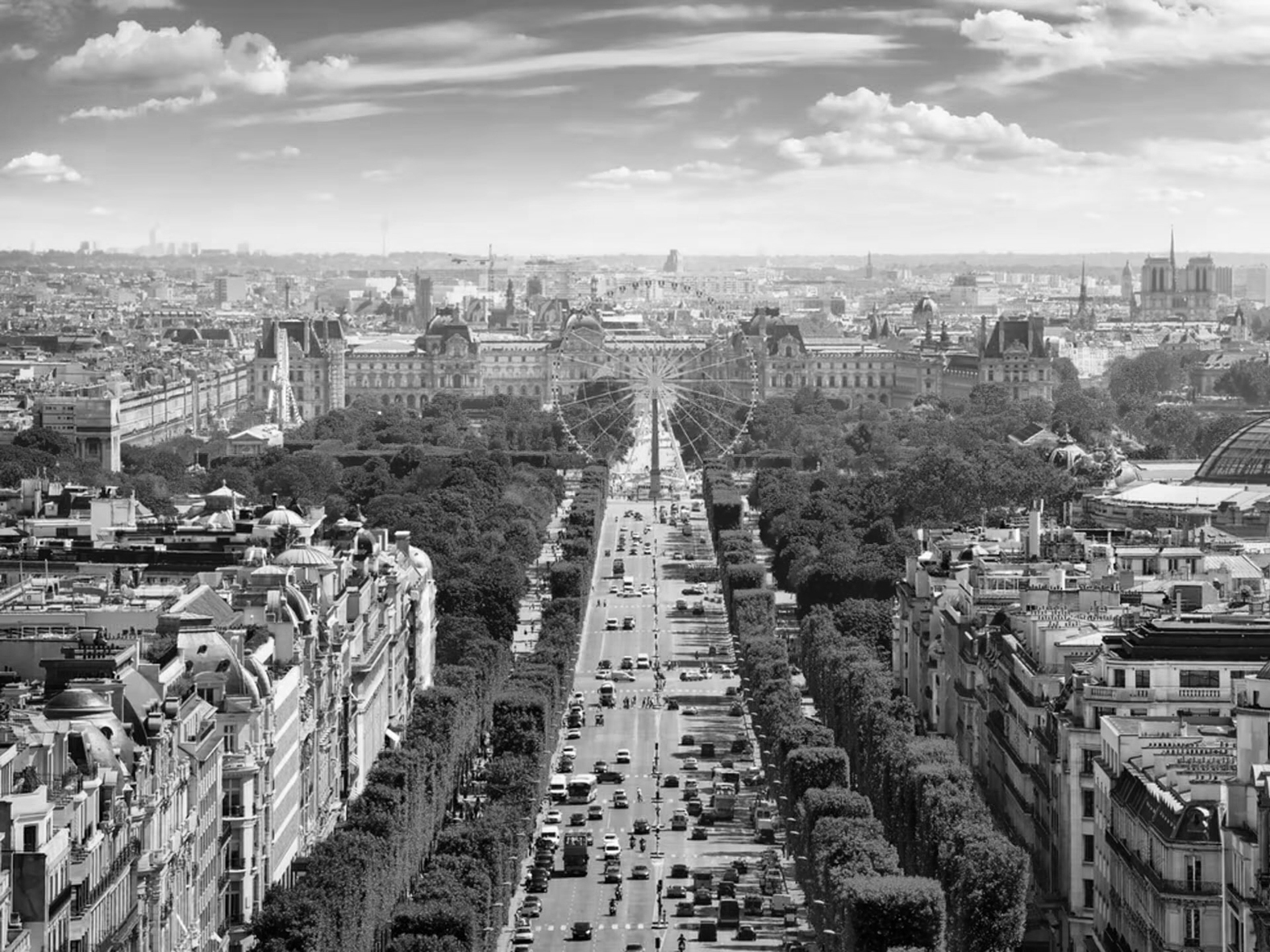
(上)圖1 巴黎香榭大道, 巴黎 /The Champs-Élysées. Paris ( Resource: Online)
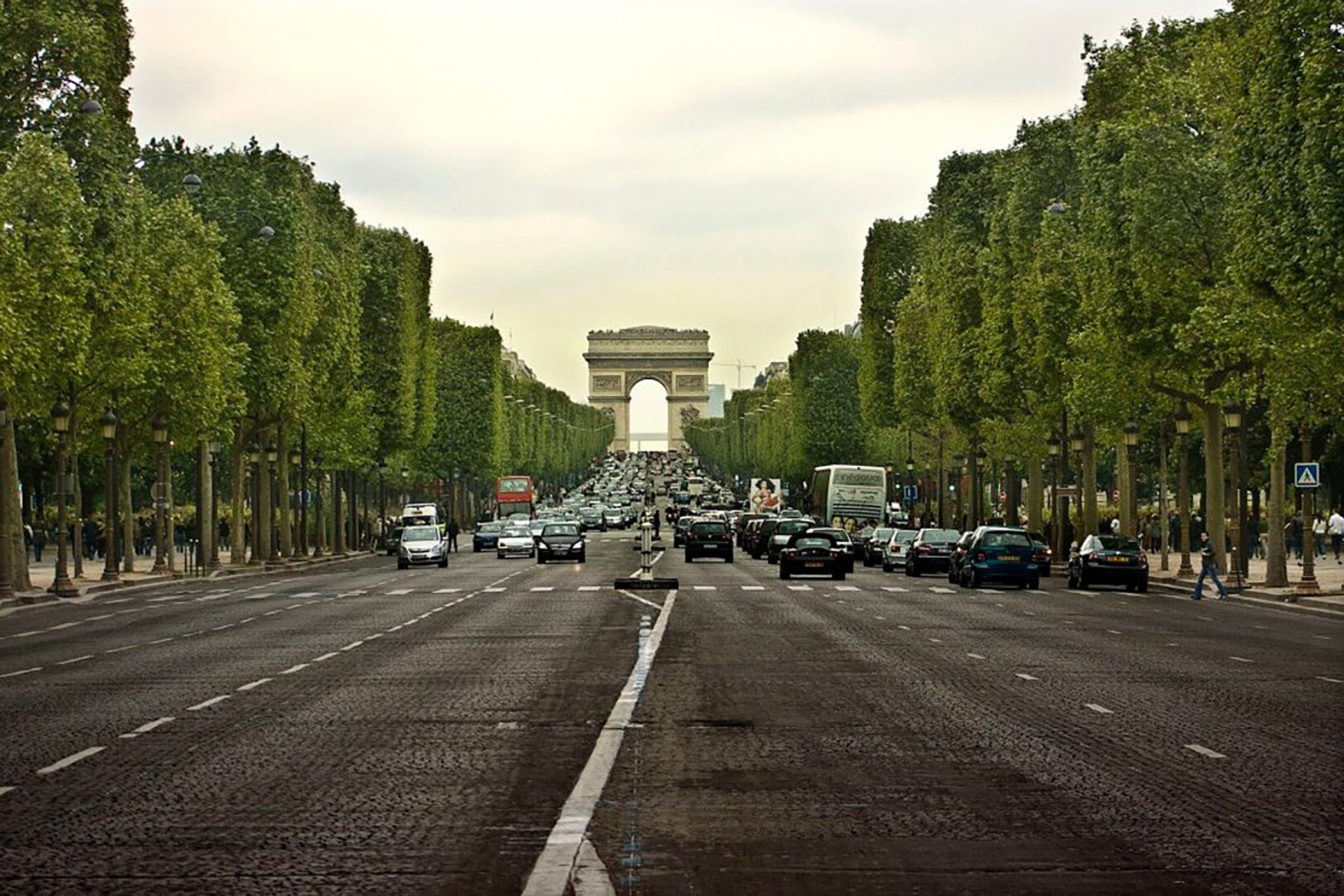
(下)圖2 街景, 巴黎香榭大道 /Street view. The Champs-Élysées ( Resource: Online)
巴黎香榭大道——典範尺度與城市象徵性的轉譯 Case Studies Paris—The Champs-Élysées as Exemplar Scale and Translated Urban Symbolism
作為歐洲城市空間象徵性最強烈的林蔭大道之一,香榭大道(Avenue des Champs-Élysées)在全球行道樹設計史中具備標誌性的地位。其設計並非單純的街道綠化計畫,而是一場自18世紀以來持續調整的國族象徵建構工程。香榭大道最初源自17世紀勒諾特爾(André Le Nôtre)對杜樂麗花園(Tuileries)軸線的延伸,最終形成今日自協和廣場向西延展至凱旋門的壯觀軸線。這條大道自成一種城市—國族—自然整合的視覺命題,其行道樹設計是該結構的核心調和器。
As one of Europe’s most symbolically charged boulevards, the Champs-Élysées holds a canonical place in street-tree design. Originating as André Le Nôtre’s 17th-century extension of the Tuileries axis and consolidating through the 18th century, the boulevard now stretches from the Place de la Concorde to the Arc de Triomphe, integrating nation, city, and nature into a singular visual proposition. Street trees are the key moderator in this composition.
尺度的絕對控制:行道樹與城市軸線的合成
Tight control of scale:
香榭大道最令人印象深刻之處,在於其尺度控制的嚴密與一貫。以梧桐(Platanus × acerifolia)為主體配置的雙排林蔭,從人行道向內收束,與建築立面、路燈、城市傢俱並構出多層次的街道橫斷面。行道樹的高大與緊密修剪,產生一種接近「綠色牆體」的垂直界面,既維持了軸線的空間導引性,又形成一種封閉感與儀式性兼具的行走經驗。
Double rows of London plane (Platanus × acerifolia) draw the pedestrian realm inward and layer with façades, lighting, and street furniture to produce a multi-strata cross-section. The tall, tightly pruned trees form near “green walls,” maintaining axial guidance while creating a walk that is simultaneously enclosed and ceremonial.
在此,我們見到一種與當代自然生態取向不同的尺度觀。香榭大道的行道樹設計,並不追求生物多樣性或原生植群,而是以強烈的形式一致性與重複秩序建構城市權力與典儀的空間語法。這種設計邏輯源自古典主義都市計畫觀,在其中,植物不再是自然物,而是城市象徵語彙的一部分。行道樹之所以有力,正因其被納入尺度控制的總體體系之中。
Here the design departs from ecological plurality toward formal consistency and repetition to encode power and ritual—an inheritance from classical urbanism in which plants serve as elements of an urban symbolic syntax. The trees’ force arises from their disciplined integration into a larger regime of scale control.
修剪與維護作為治理策略
Pruning as governance:
巴黎的行道樹管理體系是一種制度化且高度計畫性的實踐。以香榭大道為例,其樹木修剪形式極度統一,採用截頂式整枝,控制樹冠於明確幾何形狀之中。此舉雖與自然生長形態有所衝突,卻也形成城市空間辨識度極高的視覺記號。修剪不只是維護的結果,更是一種將空間形塑與時間管理結合的設計策略。
這樣的維護模式得以實現,仰賴巴黎市府行道樹管理部門(Service de l’Arbre et des Bois)多年來的制度化經營,並透過嚴格的週期修剪、病蟲害監測與更新機制,使整條香榭大道保持空間語言上的穩定性。此點對比多數亞洲城市樹木維護的碎片化與臨時應對,顯示了設計—管理—政策三者之間連續性的必要。
Paris’s Service de l’Arbre et des Bois institutionalizes rigorous, periodic pruning (including pollarding) and monitoring. Though at odds with natural growth, the uniform geometry produces a highly recognizable city image. Maintenance is not a reactive chore; it couples spatial shaping with time management as a conscious strategy—something many Asian cities struggle to sustain.
空間轉型與新世紀再設計
Twenty-first-century renewal:
近年來,隨著氣候變遷、都市熱島效應與公民使用習慣變遷,香榭大道的再生問題被重新放上公共議程。2021年,巴黎市政府公佈將推動香榭大道的大規模再設計計畫,由建築事務所PCA-STREAM主導,以回應當代都市生態、行人導向與文化認同多元化的需求。此轉型企圖保留歷史性軸線與街樹系統的骨架,同時擴增綠化面積、減少車道,並引入更具生態性的植群與活動節點。
這個計畫說明了即便是高度象徵性的都市空間,其行道樹設計仍需隨著城市系統性變化而重新定位。香榭大道的案例提示我們:行道樹設計的價值不僅存在於歷史意象之中,更在於它如何回應城市未來性、如何轉化為新的空間倫理與生態準則。
In response to climate change, heat, and shifting use, the city advanced a comprehensive redesign in 2021 (led by PCA-STREAM), retaining the historical axial skeleton while expanding planting, reducing traffic lanes, and introducing more ecological vegetation and activity nodes. Even iconic urban spaces must reposition their tree systems with systemic change, translating history into new ethics and ecological rules.
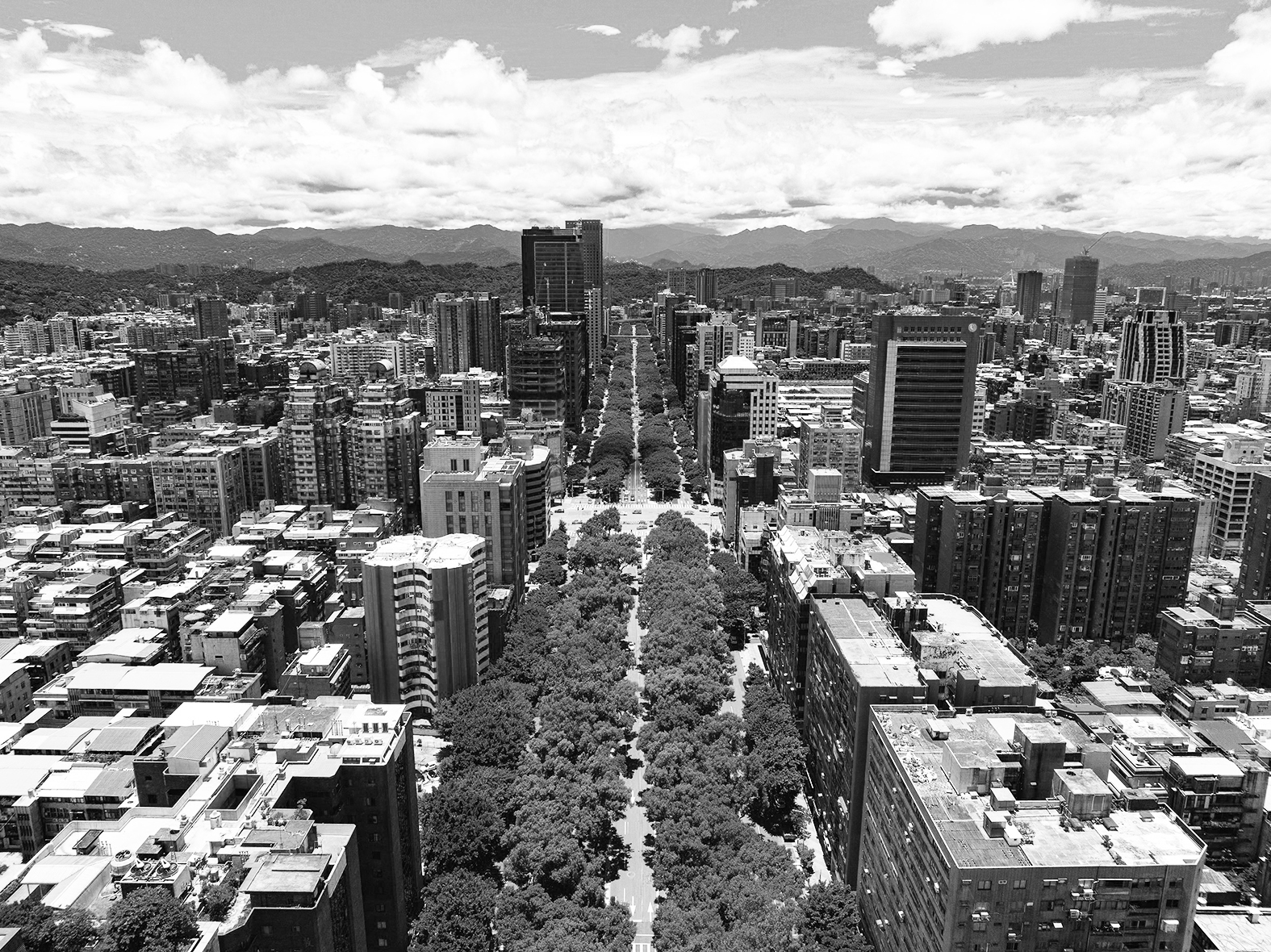
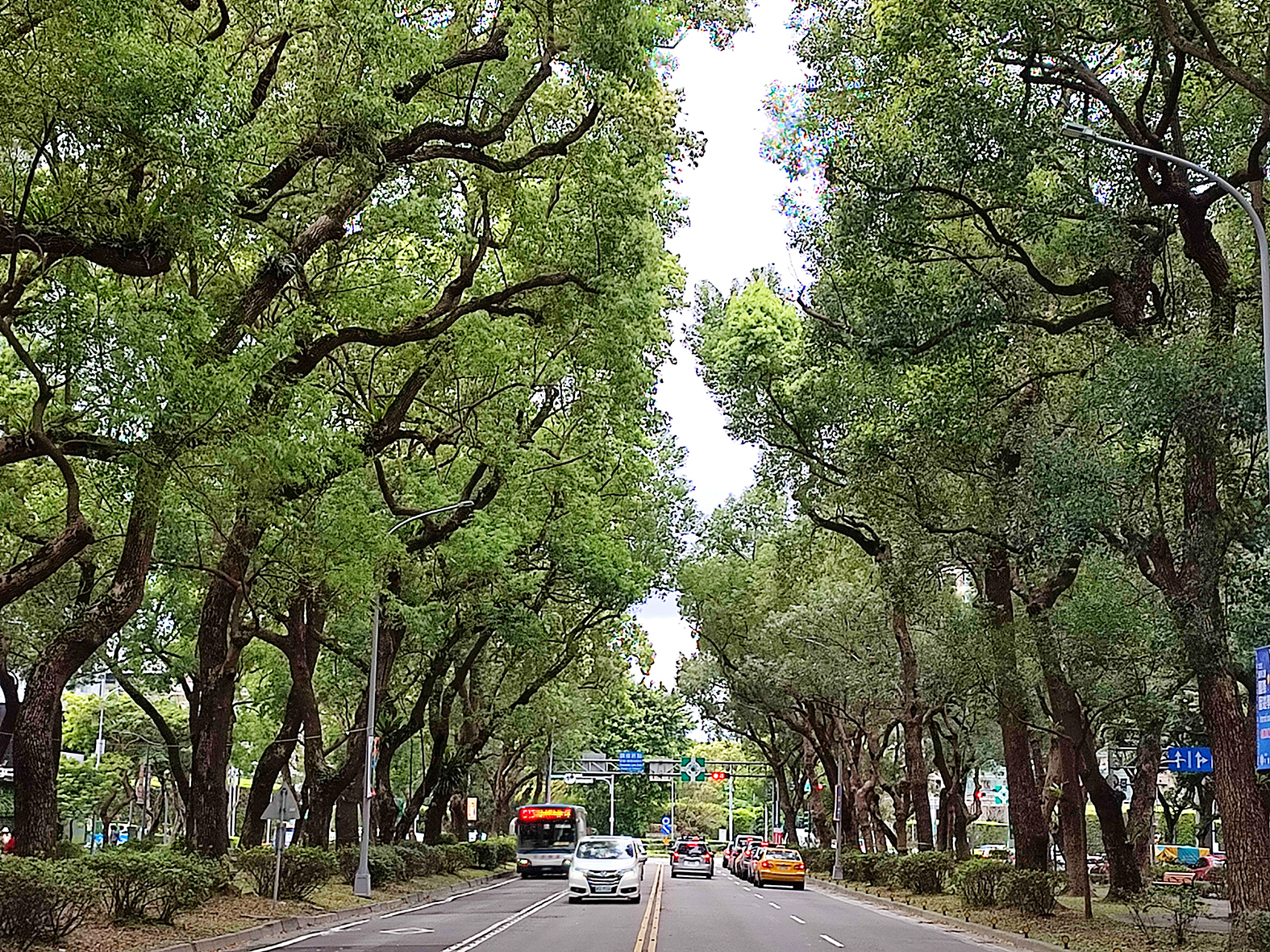
(上)圖3 敦化南北路, 台北 (Dunhua South/North Road. Taipei ( Resource: Online))
(下)圖4 街景, 敦化南北路 (Street view. Dunhua South/North Road ( Resource: Online))
台北敦化南北路——熱帶城市中的線性森林與尺度調度 Taipei—Dunhua South/North Road as a Tropical “Linear Forest” and Scalar Tuning
在多數東亞城市以功能性與開發強度為主導的街道系統中,台北的敦化南北路是一條罕見地保有大尺度林蔭結構的都市幹道。從南京東路至信義路,這條貫穿台北東區的軸線,不僅是交通幹道,也是少數被設計為城市綠色通廊的街道類型,構成了台北都市空間的一個重要識別基礎。尤其是在高度機動化與建蔽率偏高的城市結構中,敦化南北路的行道樹設計提供了一個關於熱帶城市如何可能擁有「線性森林」的參照模型。
In East Asian cities dominated by functionality and development intensity, Dunhua South/North Road is a rare urban arterial with a large-scale canopy structure. Running through Taipei’s eastern districts, it is not only a traffic spine but also a green corridor—an important component of the city’s identity, especially where high motorization and high site coverage are prevalent.
雙排樟樹構成的時間性界面
A temporal interface of double-row camphors:
敦化南北路最鮮明的特色在於其”雙排大型喬木樟樹(Cinnamomum camphora)”所構成的連續綠蔭。這些樟樹具備常綠性、高冠幅與對都市環境的高度適應力,自1970年代以來持續存在至今。樹木配置採用中央綠帶與兩側人行道同步種植的方式,使得整體街道空間具有罕見的綠蔭封閉感,特別在炎熱潮濕的亞熱帶城市環境中,提供了重要的氣候調節與人行舒適性。
這種雙重配置不僅提升遮蔭密度,更形成了一種內外層次分明的尺度空間:中央綠帶的行道樹提供都市空間骨架,兩側人行道的行道樹則與行人尺度產生直接對應。這樣的尺度安排,使得街道不僅在視覺上具有強烈的一致性,也在環境功能與心理感受層面提供了多層次的空間邏輯。
Since the 1970s, double rows of large camphor trees (Cinnamomum camphora) have formed continuous shade via both the central median and sidewalks. The result is unusually strong enclosure—vital in hot, humid climates—delivering climatic comfort and pedestrian amenity. The central median provides the urban spatial skeleton, while sidewalk rows match pedestrian scale—producing layered logic in perception and performance.
與香榭大道不同的是,敦化南北路的尺度控制並非追求形式秩序的儀式性,而是一種氣候調適與空間包容性的實用策略。其尺度語言未見形式上的幾何控制,但在時間中形成了一種樹冠高度、行走密度與視覺穿透性之間的自然平衡,證明了尺度不必以控制為前提,也可在生長過程中透過管理實踐達成空間一致性。
Unlike the Champs-Élysées’ ritualized formal order, Dunhua’s scale is a pragmatics of climate adaptation and inclusivity. Without geometric regimentation, a long-term balance among canopy height, walking density, and visual permeability emerged through growth and ongoing management.
樹種連續與都市時間的壓縮
Species continuity and compressed urban time:
相較於許多城市行道樹品種零散、多樣且經常更替,敦化南北路自始至終採用單一樟樹樹種,使其在城市意象中建立起高度辨識性。這種連續性構成了城市時間中的「植栽記憶」:市民能夠以此識別區域位置與城市風景中的特定節點,形成情感地圖的一部分。這種植栽的單一性雖在生態角度可能降低多樣性,但在都市構圖與文化認同中卻具有重要的整合性功能。
The consistent use of a single species has created high recognizability—an urban “plant memory” that anchors emotional maps. While single-species avenues can reduce biodiversity, they can unify urban composition and identity.
然而,這樣的設計也面臨挑戰。近年樟樹年齡已達40年以上,部分健康狀況不佳,引發是否全面汰換的爭論。這暴露出一個長期缺乏「時間性替代計畫」的城市維護盲點:在植物空間成為集體認同後,更新行動便不再只是技術問題,而涉及記憶、情感與公共參與的協商過程。此點顯示,行道樹不僅是自然元素,而是時間壓縮下的社會與文化介面。
As the camphors age (many 40+ years), debates over replacement expose a maintenance blind spot: once plantings embody collective memory, renewal becomes a negotiation of memory, emotion, and public participation, not merely a technical task.
維護制度與城市治理的斷裂
Governance discontinuities:
敦化南北路的行道樹設計雖具系統性,但在維護制度上卻顯現出管理的局部性與不連續性。各區段的修剪頻率、技術標準並不一致,常見臨時性修枝造成樹形破壞,或是因鋪面更新而導致根系受損。這類問題凸顯出:即使設計具備高度潛能,若缺乏對「生長作為設計過程」的認知與制度支持,其效果終將無法延續。
Despite systemic design, maintenance has been patchy: inconsistent pruning standards and paving works damaging roots.
此外,由於管轄部門分散於市政各局處之間(如工務局、公園處、交通局),導致行道樹成為一種管理責任難以整合的「中性空間」。缺乏長期的專業團隊與跨領域整合,行道樹的潛能容易在日常治理中被消耗,最終淪為技術性修補對象而非城市策略。
Fragmented jurisdiction across departments turns street trees into “neutral spaces” with diffuse responsibility, risking incremental erosion of potential.
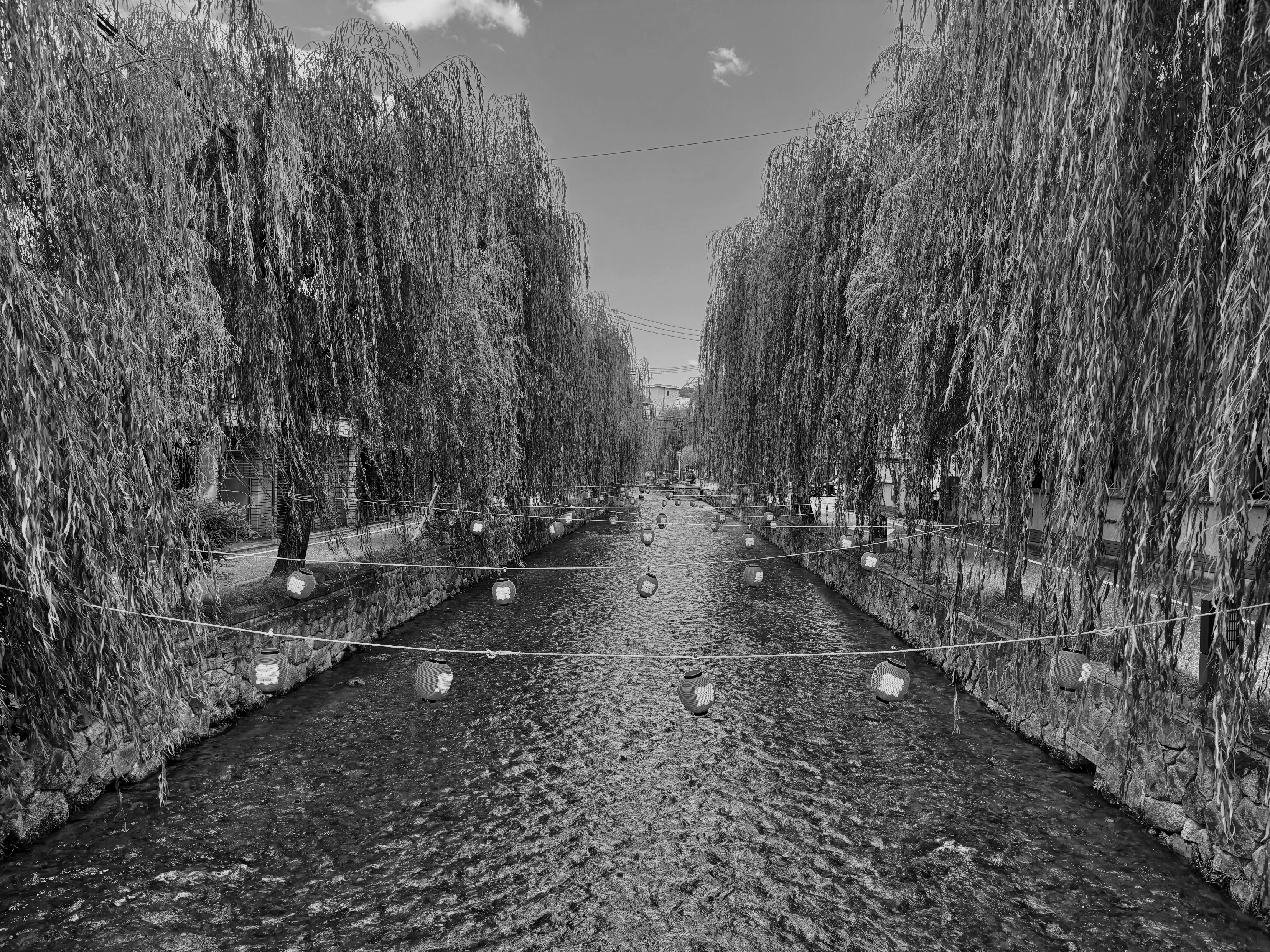
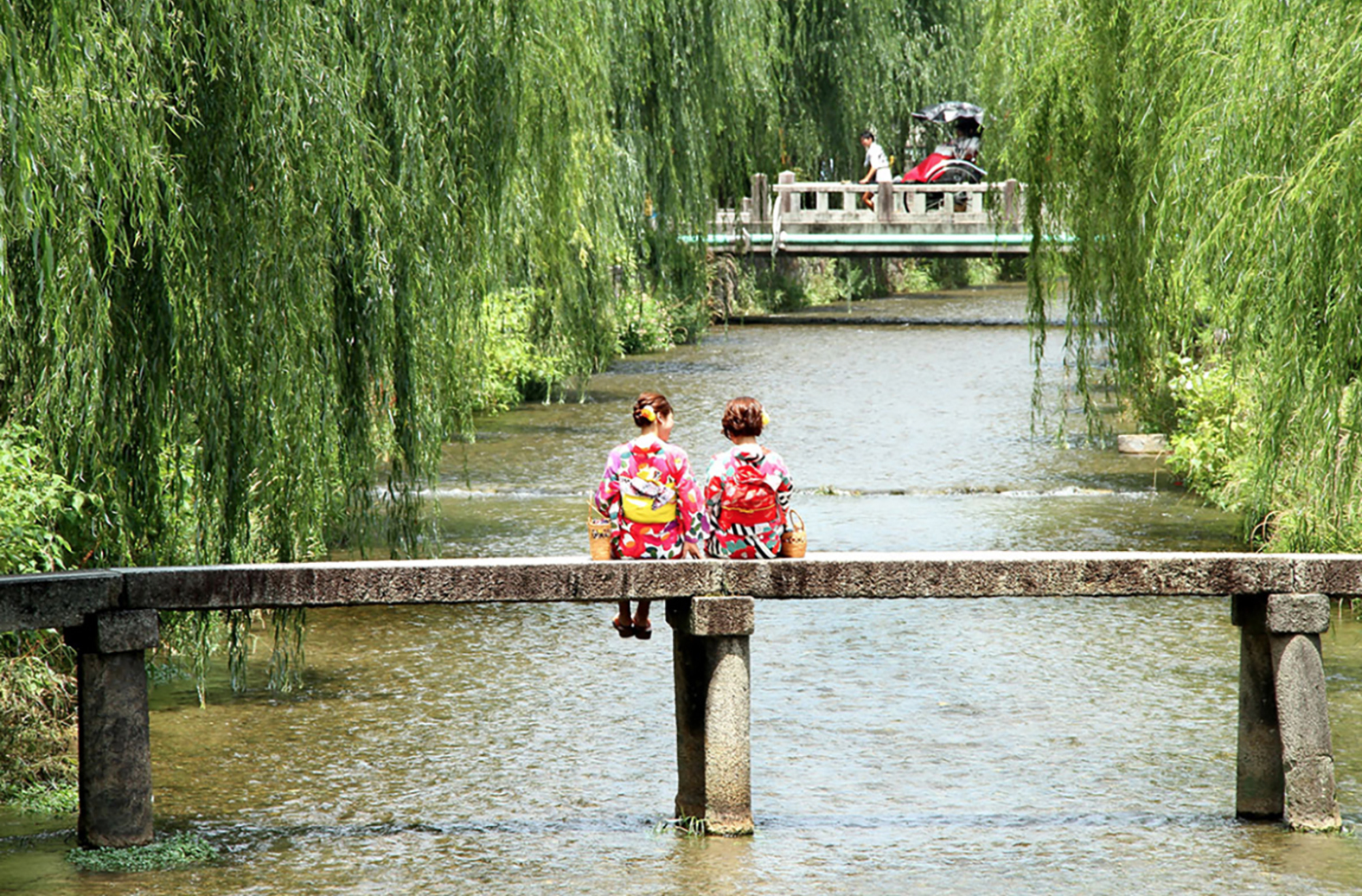
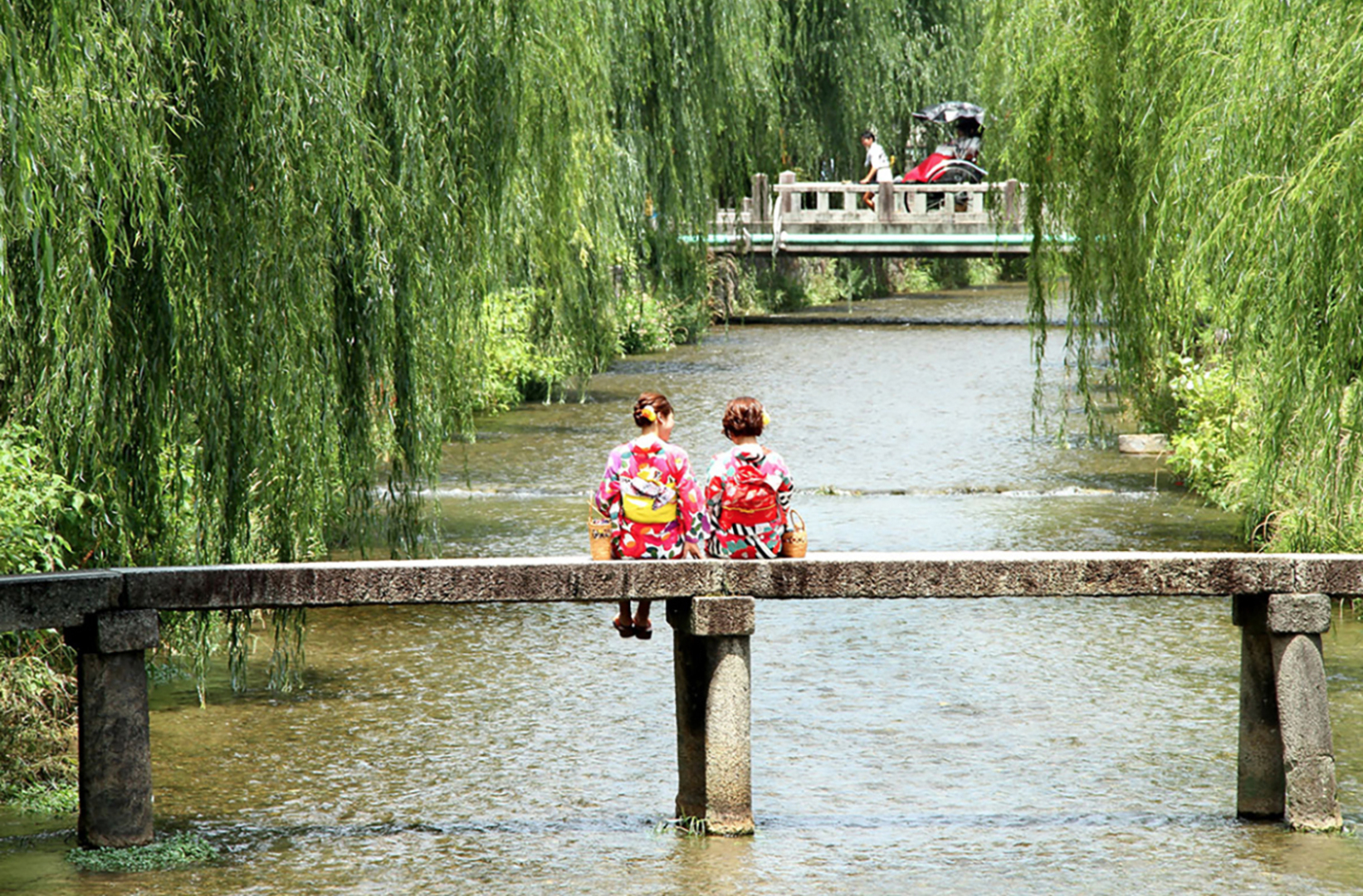
(上)圖5 白川, 京都 (Shirakawa. Kyoto ( Resource: Yifeng Lin))
(下)圖6 街景, 白川 (Street view. Shirakawa ( Resource: Akira Taniguchi))
京都白川——自然流域與文化尺度的對應 Kyoto—Shirakawa as the Fit Between Natural Catchment and Cultural Scale
相較於前述兩條以都市主幹道構成的案例,京都白川沿岸的行道樹系統呈現出一種與自然地形、歷史紋理與人文尺度緊密交織的特殊情境。白川作為鴨川支流,從東山流經祇園、岡崎等地,是京都東側城市肌理中最富詩意與歷史感的線性空間。沿岸狹窄的步道、小規模石橋、町屋立面與高木行道樹,構成一種遠離都市主軸的「微型城市段落」,在尺度與時間層面上提供了一種與生長性高度協調的行道樹設計參照。
Along the Shirakawa, a tributary of the Kamo River flowing through Gion and Okazaki, street trees interweave tightly with terrain, history, and human scale. Narrow paths, small stone bridges, machiya façades, and tall trees create a “micro-urban section” away from the main axes, offering a reference for designs in high accord with growth and place.
低尺度的空間共生與視覺滲透
Low-scale coexistence and visual porosity:
白川沿岸行道樹以柳樹(Salix babylonica)、櫻花(Prunus yedoensis)與部分落葉喬木為主,呈現鬆散、不對稱但具節奏感的線性佈局。這種樹木配置方式與一般行道樹設計所強調的形式規則大異其趣,更多反映出與河道走向、民宅入口與視線穿透之間的共生關係。
Willows (Salix babylonica), cherries (Prunus yedoensis), and other deciduous species are loosely, asymmetrically, yet rhythmically arranged.The layout follows river course, house entries, and sightlines. Branches lean over water, crowns dip across bridges, and trunks thread between façades and stone walls—an “undesigned design” that reveals plants as mediators linking people–water–history.
行道樹並未被強制納入單一節奏或尺度之中,而是接受現地條件與流域型態的引導:枝條向河面傾斜、樹冠低垂覆蓋橋面、或穿插於民宅立面與石牆之間,皆使得白川景觀呈現一種「非設計的設計性」,也展現植物作為媒介、連接人—水—歷史之間關係的潛能。
這種尺度極為謹慎——不以高大為目標,而以細膩、滲透、讓渡為原則。白川不是為交通而設的街道,而是以流域邏輯生長的生活段落,其行道樹不為標誌性、也不為紀念性,而是用最小尺度與空間共處。
The principle is not “bigger is better” but fineness, permeation, and deference. Shirakawa is a lived fluvial segment rather than a traffic street; its trees are neither iconic nor monumental, but companions in shared space.
季節與地域文化的詩意融合
Poetic fusion of season and place:
白川最為人稱道的時節是春季櫻花盛開與秋季柳影斜斜的交錯時段,形成極具詩意的季節性景觀。這種景觀非由單一花期構成,而是在一年不同時間由多種樹種輪流登場,形成時間性與空間感的交錯劇場。
Spring blossoms and autumn willows alternate in a quiet theater of time and space.
值得注意的是,這種季節性從未以「壯觀」為目標,而是以「相遇」與「細部感知」為本質。城市在此處不是控制者,而是讓植物與空間自行對話的容器。這樣的設計哲學,也呼應京都城市長年來對文化尺度的謹慎維持:建築高度限制、色彩規範、屋瓦線對齊等制度,讓白川成為少數能在21世紀仍保有18世紀空間節奏的城市段落。
The goal is not spectacle but encounter and detail. The city here is a container for dialogue between plants and space, echoing Kyoto’s long-standing calibration of cultural scale (height limits, color palettes, roofline continuity). Thus Shirakawa preserves an 18th-century spatial rhythm in the 21st.
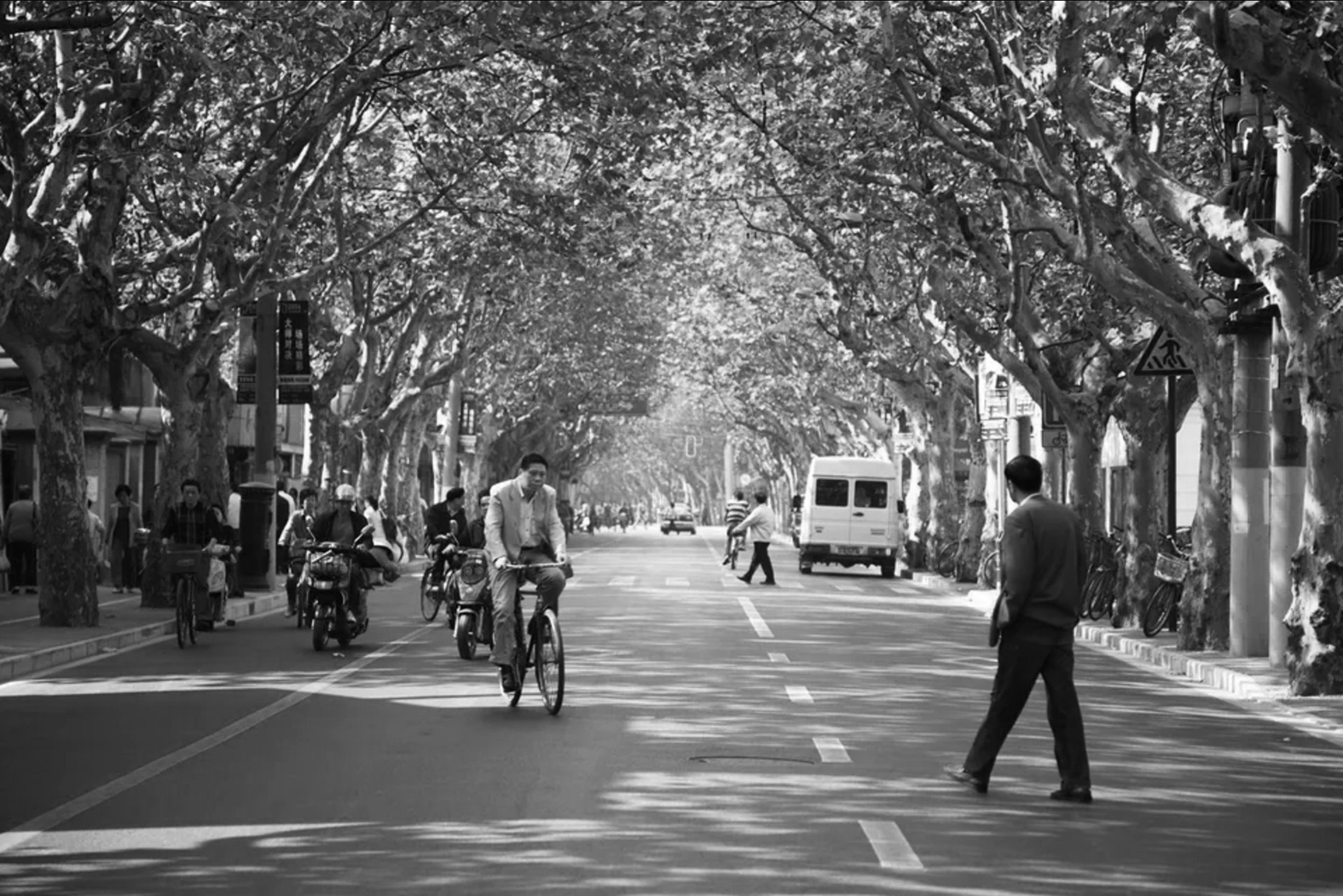
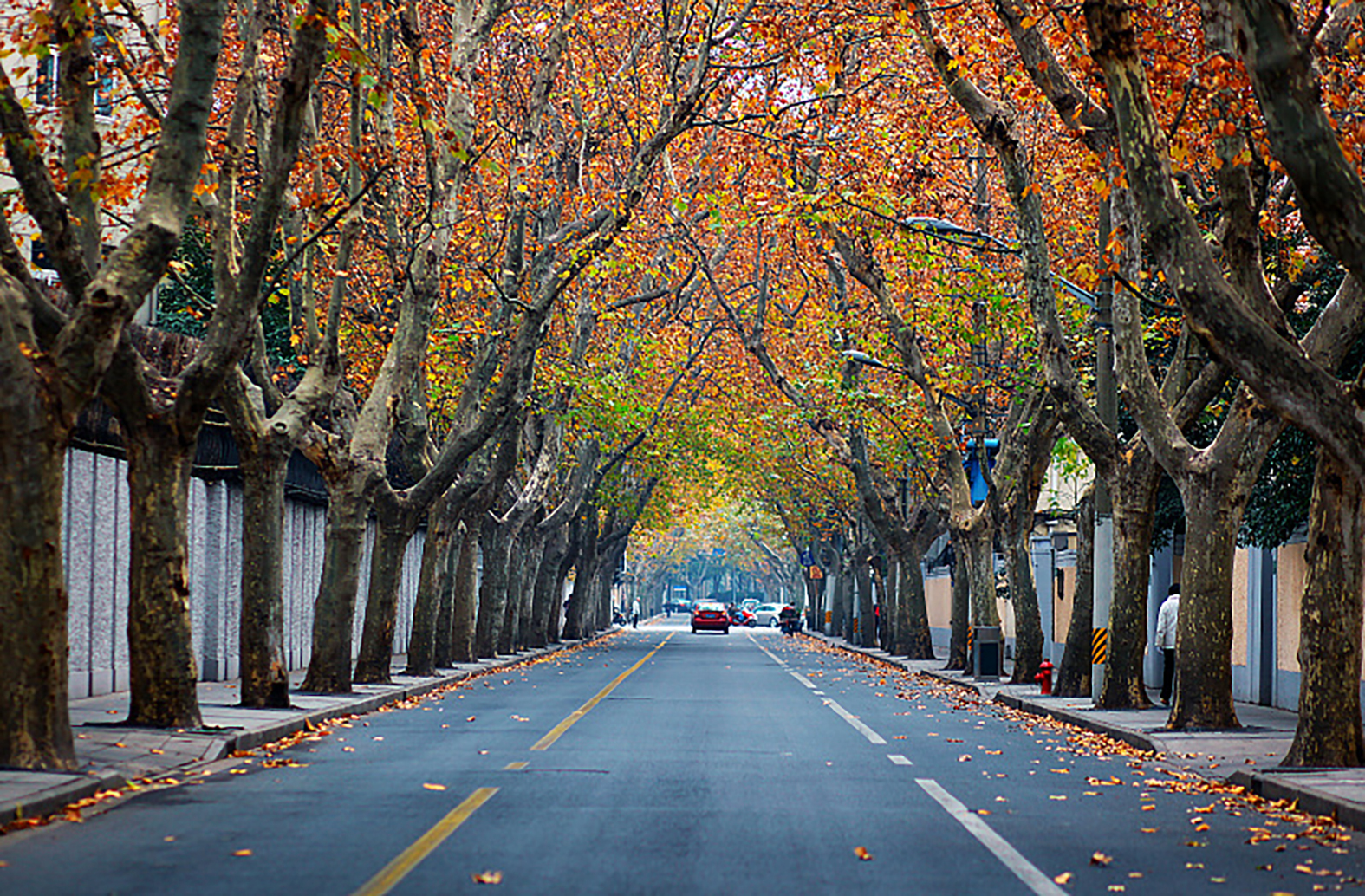
(上)圖7 前法租界, 上海 (The Former French Concession. Shanghai ( Resource: Online))
(下)圖8 街景, 前法租界 (Street view. The Former French Concession ( Resource: Online))
上海法租界——歷史轉譯與植栽記憶的層疊 Shanghai—The Former French Concession as Historical Translation and Layered Plant Memory
上海法租界的行道樹系統是一個極具歷史性與政治層疊性的景觀構造。這一區域自19世紀末法國租界成立以來,逐步形成一種異質性的城市構造語言:歐洲式街道格局與東亞氣候環境之間的長期磨合,反映出城市現代化、殖民經驗與在地調適的多重交匯。行道樹的存在,在此不再只是城市美化元素,更是社會權力、歷史記憶與都市空間轉譯的結晶。
The Former French Concession embodies rich historical and political layering. European street grids met East Asian climate, reflecting modernization, colonial experience, and local adaptation. Street trees here crystallize social power, historical memory, and urban translation.
梧桐的形象與殖民景觀的遺緒
Plane trees and colonial residues:
法租界行道樹以法國梧桐(Platanus × acerifolia)為主,至今仍廣布於衡山路、永康路、武康路等主要街道。這些樹木源自殖民政府自歐洲引入、並於20世紀初開始大規模栽植。雖初衷為提供遮蔭與提升市容,但在時間中,這些梧桐已逐漸轉化為上海都市視覺記憶的一部分,其筆直幹姿與高大冠幅構成城市獨特的綠蔭網絡,也承載著難以割捨的文化情感。
London planes (Platanus × acerifolia) imported during the concession era now dominate streets such as Hengshan, Yongkang, and Wukang. Initially shading and beautification devices, they evolved into a distinctive green network and emotional anchor.
然而,這一植栽策略的歷史基礎亦不無問題。梧桐非東亞原生物種,其根系與病蟲害處理長期仰賴特殊維護制度;同時,這些植栽亦代表殖民權力對城市空間的具體刻劃。今日的設計師與市政單位若欲更新此系統,便必須在「歷史保存」與「現代更新」之間進行微妙協商。
Yet as non-native species they demand specific care and recall colonial inscription on urban space. Updating the system requires a delicate balance between heritage preservation and contemporary needs.
尺度的歷史遺產與當代適配
Historic scale, present adaptation:
法租界的街道尺度偏小,兩側行道樹多以「單排對稱」配置,部分街區甚至因人行道狹窄而採用「偏軸種植」方式。然而,由於梧桐樹冠發展極大,最終仍能覆蓋整條街道,產生極高的遮蔭與空間界定效果。這種「大樹小街」的比例關係,其實是一種歷史制度與自然生長雙重產物,也為今日空間更新提出挑戰。
Narrow streets with single rows (sometimes off-axis) eventually become fully canopied by expansive plane crowns—“big trees, small streets.” This proportion, a joint product of historical regulation and natural growth, now challenges street upgrades; root damage or removals trigger public controversy.
新的開發案或街道翻修往往難以與原有尺度兼容,甚至導致根系受損或樹木移除,從而引發社會爭議。此案例提醒我們,行道樹的尺度控制應視為歷史延續性的一部分,而非可輕易調整的設計參數。
Scale control must therefore be treated as historical continuity, not an adjustable afterthought.
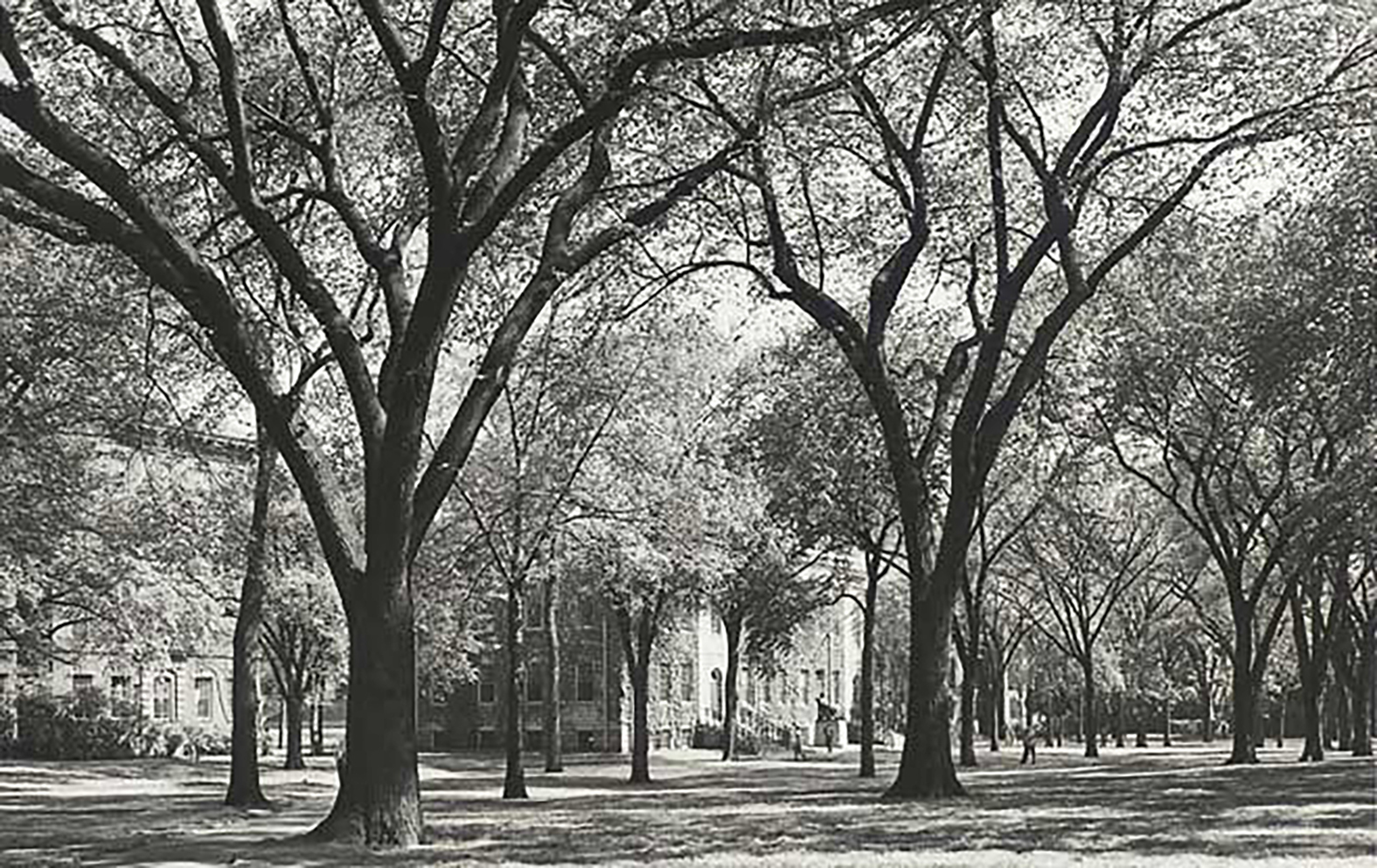
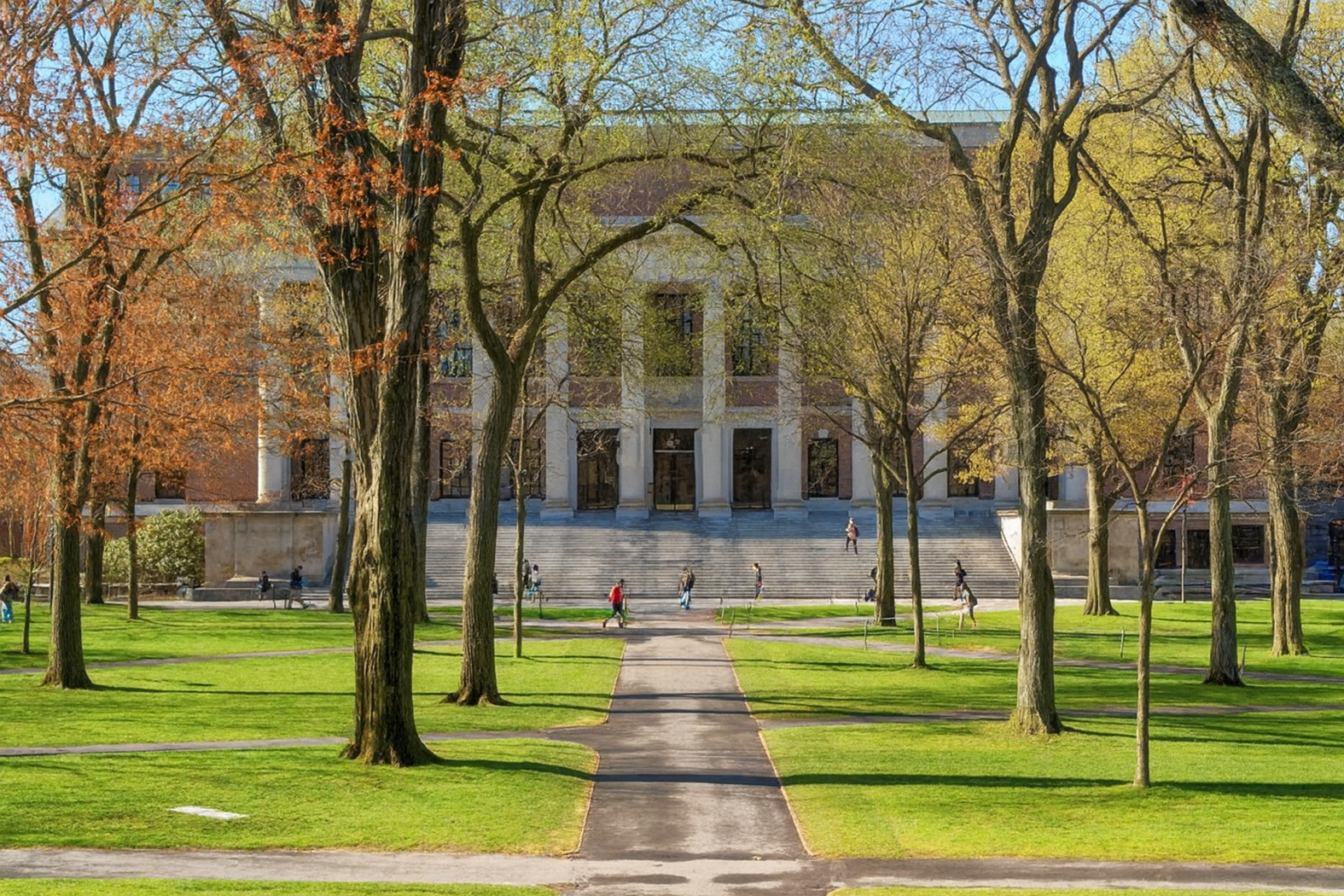
(上)圖9 哈佛校區, 劍橋 (Harvard campus. Cambridge ( Resource: Online))
(下)圖10 街景, 哈佛校區 (Street view. Harvard campus ( Resource: Online))
哈佛波士頓劍橋校區——景觀秩序與文化認同的樹木策略 Cambridge— Harvard campus, Tree Strategies for Landscape Order and Cultural Identity
與以上多為城市主幹道或生活街區的案例不同,哈佛大學校園作為一個高度自治的空間單元,其行道樹策略具備更高的一致性與管理可控性。這使得哈佛成為檢視「時間性設計」與制度治理如何互補的理想範例。特別是在其歷史中庭——哈佛廣場(Harvard Yard)與主幹道區域——可見行道樹策略如何塑造學術文化的空間語法。
Harvard, as a highly autonomous spatial unit, can maintain consistency and management control, making it an ideal example of how temporal design and governance reinforce each other. In Harvard Yard and along principal walks, tree strategies articulate the spatial grammar of academic culture.
尺度與知識空間的同步生成
Scale synchronized with knowledge space:
哈佛校園的行道樹主要以榆樹(Ulmus americana)、橡樹(Quercus spp.)、楓樹(Acer spp.)為主,這些中大型落葉喬木依循既有步道與建築主軸配置,形成一種極具秩序但非軍事性對稱的街區肌理。尺度上,這些樹木不僅與建築高度、開口關係緊密對應,更與行人移動節奏產生身體尺度的同步感,塑造出所謂「思考的空間」——即使行走也是學習的一部分。
Elms (Ulmus americana), oaks (Quercus spp.), and maples (Acer spp.) align with paths and architectural axes, forming an orderly yet non-militaristic fabric. Tree scale correlates with building height and openings and syncs with pedestrian cadence, producing spaces for thinking where walking becomes part of learning.
哈佛的景觀系統未嘗追求宏大,而是在學術活動與自然節奏之間建立一種低調但堅定的空間語法。這種語法不是以紀念性為出發,而是將樹木視為教育與生活系統的「空間骨架」。
The landscape aims not at grandiosity but at a quiet, firm grammar binding scholarly life to natural rhythms.
修剪制度與校園治理的合一性
Unified maintenance and governance:
哈佛的行道樹維護體系具有極高內部整合性,由校園設施處與景觀專業顧問長期合作制定樹木管理計畫。修剪、換植、保健作業皆由內部統籌,並配合校園建設與交通節奏調整實施。此點反映出:當設計者能夠參與治理體系設計,時間性的設計才有可能具備可持續的空間力量。
Harvard’s integrated management—facilities teams working with landscape professionals—plans pruning, replacement, and care in step with construction and circulation. When designers participate in governance design, temporal design gains durable spatial agency.
結論:台灣行道樹規劃的反思與未來策略 IV. Conclusion: Reflections on Taiwan’s Street-Tree Planning and Future Strategies
回顧前述案例——從巴黎香榭大道的典範尺度控制、敦化南北路的熱帶綠蔭骨架、京都白川的文化尺度對應、上海法租界的歷史層疊、到哈佛校園的制度治理實踐——我們可以看到行道樹作為一種城市時間性設計,其影響遠超出表面綠化或遮蔭功能,而深入到城市構成、社會記憶與治理邏輯之中。然而,台灣的行道樹規劃在當前的發展脈絡中,卻往往被限縮在單一面向的技術操作層次,忽略其作為城市文化裝置的深層潛力。
Across the cases—from the Champs-Élysées’ disciplined scale, Dunhua’s tropical canopy spine, Shirakawa’s cultural scale, the French Concession’s historical strata, to Harvard’s institutional governance—street trees emerge as temporal urban design, shaping not only greening or shade but also urban structure, social memory, and governance logic. In Taiwan, however, street-tree planning is often confined to technical operations, overlooking its deeper potential as an urban cultural apparatus.
台灣行道樹景觀設計的反思-設計與治理的斷裂
Reflection on Streetscape design in Taiwan
最明顯的問題之一,是台灣在行道樹設計與後續治理之間的斷裂關係。設計與植栽多數由工程案主導,維護則轉交予各地方政府或外包廠商執行,缺乏長期視野與植物生長知識的連貫性。大量剪成「鳥籠狀」的樹形、不當修枝造成的腐朽,乃至開發案中為求景觀對稱而選擇非適地適種的樹種,皆導致行道樹系統難以隨時間發展為具空間與情感深度的城市記憶。
The design–governance gap. Design and planting are typically project-led, while maintenance passes to local governments or contractors, lacking continuity in long-term vision and plant growth knowledge. “Bird-cage” pruning, decay from poor cuts, or ill-suited species chosen for symmetry or quick effect all hinder the maturation of trees into spaces with depth and attachment.
對比哈佛或巴黎的例子,行道樹的設計不僅在於「種下什麼」,更關鍵的是「如何陪它長大」。這種「時間作為設計方法」的觀念,尚未在台灣的制度中取得應有位置。
As seen in Harvard and Paris, what matters is not only what we plant but how we help it grow—a temporal method still missing institutionally.
空間尺度的誤讀與城市語法的缺席
Misread scales and missing urban grammar.
在許多都市更新與街道改造中,行道樹往往被視為可調整的視覺配件,而非構成城市語法的基本元素。結果便是——尺度過大而壓迫人行空間、尺度過小又難以提供遮蔭或結構感;樹距過近造成競爭與病害、樹距過遠則喪失街道節奏性。這些現象不僅反映設計缺乏整體空間邏輯,也顯示出「街道作為線性系統」的理解仍未深化。
In many upgrades, trees are treated as adjustable décor rather than foundational grammar. Overscaled trees can oppress pedestrian zones; underscaled ones cannot shade or structure; spacing too tight invites competition and disease, too wide breaks street rhythm.
若將行道樹視為一種時間性的結構語言,那麼它的尺度設計就不應僅對應當下使用,而應反映未來可能的成長狀態、空間變遷與社會生活模式。巴黎香榭大道與台北敦化路的比較說明了這一點:一個是強制的古典秩序,一個是氣候調適下的自然構型,而台灣現階段多數街道尚未發展出任何空間語言的自覺。
If trees are a temporal structural language, their scale must anticipate future growth, spatial change, and social patterns—whether through formal order (Paris) or climatic pragmatics (Taipei). Many Taiwanese streets have yet to form any conscious spatial language.
樹種選擇的標準化與季節性缺席
Standardized species and absent seasonality.
樹種選擇常受限於既有苗圃供應與維護方便性,導致都市中大量使用幾種單一樹種(如樟樹、欒樹、楓香等),形成視覺單調與生態風險。更甚者,有些樹種在都市環境中並不適宜,但因為短期成長快或初期視覺效果佳而被大量選用,最終導致根系膨脹破壞人行道、或遭遇氣候與病害風險而需整排汰除。
Nursery supply and maintenance convenience drive limited palettes (camphor, golden rain tree, sweetgum), fostering visual monotony and ecological risk. Some species thrive early yet later upheave sidewalks or succumb to climate/pests, forcing wholesale removal.
此外,都市街景中極少考慮「季節性體驗」的設計策略。與京都白川、哈佛校園等案例相比,台灣行道樹缺乏在春秋轉換、光影變化中構成時間感知的能動性,也喪失了藉由季節變化與市民建立情感連結的可能性。
Seasonality is seldom designed, missing opportunities to cultivate temporal attachment through spring–autumn transitions and light–shadow change.
行道樹作為城市未來策略的潛能
Street trees as tools for urban futures.
儘管現狀面臨多重限制,我們仍可視行道樹為一種具有高度轉化潛能的都市元素。其關鍵在於:是否能從「附屬設施」重新定位為「結構性介面」。也就是說,行道樹應被視為構築未來城市願景的基礎部件——無論是面對氣候變遷下的城市降溫、交通轉型中的慢行空間設計、或公共衛生危機後對開放空間的再想像,行道樹都提供一種可被時間培養的、可持續累積的城市韌性工具。
Despite constraints, street trees possess high transformative potential—structural interfaces, not accessories. They can underwrite cooling under climate change, support slow-mobility streets, and reimagine open space post-public-health crises.
這需要新的設計方法、新的政策架構與新的治理文化:設計者須能想像百年後的城市街道,制度需允許慢速而持續的成長過程,市民則需重新理解植物不只是「被管理的物」,而是城市生活的一部分。
This requires new design methods, policy frameworks, and governance cultures: designers imagining centuries, institutions allowing slow, steady growth, and citizens recognizing plants as part of urban life, not merely things to be managed.
一種與時間共築的城市態度
A City that Builds with Time
行道樹的美,不只在於其形體、其蔭影,更在於它召喚出我們對「城市能否長成美好樣貌」的想像。在速成與更新的壓力之下,行道樹提醒我們:某些城市品質,必須慢慢養成。若城市是一種願意等待植物長大的制度,那麼它就有可能長出比建築更深的記憶與形象。
The beauty of street trees lies not only in form and shade but in their invitation to imagine cities that can grow well. Against pressures for speed and churn, street trees remind us that certain qualities must be cultivated slowly.If a city is a system willing to wait for plants to mature, it can grow memories and images deeper than architecture.
台灣的城市設計,或許可以從這裡重新開始:以一棵行道樹的時間尺度,重新思考我們想要的是什麼樣的都市。
Perhaps Taiwan’s urban design can begin here: to rethink the city we want through the time scale of a single street tree.
參考來源
圖1 巴黎香榭大道, 巴黎 (https://parispass.com/en/things-to-do/attractions-near-champs-elysees)
圖2 街景, 巴黎香榭大道 (https://roadstotravel.net/france-paris-champs-elysees/)
圖3 敦化南北路, 台北 (https://zh.m.wikipedia.org/zh-cn/敦化南路)
圖4 街景, 敦化南北路 (https://vocus.cc/article/63f99c73fd89780001d6139c)
圖5 白川, 京都 (谷口哲 Akira Taniguchi)
圖7 前法租界, 上海 (www.vogue.com/article/shanghai-old-french-concession-guide)
圖8 街景, 前法租界 (https://news.cgtn.com/news/2023-03-26/Soaking-up-Shanghai-s-historical-vibes-on-Wukang-Road-1iui2YzuvWU/index.html)
圖9 哈佛校區, 劍橋 (Jorge Scalcedo. www.alamy.com/stock-image-harvard-university-college-campus-and-library-in-early-spring-people-167537164.html)
圖10 街景, 哈佛校區 (https://www.thecrimson.com/image/2022/4/14/yard-1953/)